Exogenous Ketones and Brain Function: What Does the Science Actually Say?
Exogenous ketone supplements have exploded in popularity, with brands like Ketone-IQ and Kenetik promising enhanced focus, mental clarity, and cognitive performance. Athletes, executives, biohackers, and anyone seeking a mental edge are turning to these supplements. But is there real science behind the claims, or is this just another expensive placebo? This comprehensive analysis examines the peer-reviewed research to separate fact from marketing hype.
Understanding Ketones: The Brain's Alternative Fuel
Before evaluating the evidence, it's essential to understand what ketones are and how they work in the brain. Beta-hydroxybutyrate (BHB) is the primary ketone body used for energy. Under normal conditions, the brain runs almost exclusively on glucose. However, ketones serve as the brain's only significant alternative fuel and can become the primary energy source when glucose is limited [1].
This is not speculation - it's established biochemistry. BHB possesses an intrinsically high heat of combustion, making it an efficient mitochondrial fuel. Research published in Neurochemical Research demonstrates that ketones are 28% more efficient at generating cellular energy (ATP) than glucose alone [2]. The brain can derive up to 60-70% of its energy needs from ketones during extended fasting or ketogenic dieting.
Exogenous ketones (supplements) provide BHB directly, bypassing the need for dietary restriction or fasting. The question is: does artificially elevating blood ketones translate to meaningful cognitive benefits?
The Evidence FOR Cognitive Benefits
University of Rochester Study (2024)
Researchers at the Del Monte Institute for Neuroscience published findings in May 2024 identifying specific mechanisms in the brain's hippocampal network that are "rescued" by ketones. They found that acute insulin resistance impairs several aspects of neuronal function, including synaptic activity, axonal conduction, network synchronization, and synaptic plasticity. When researchers administered D-BHB (a form of ketones), the synaptic activity that was previously impacted was rescued, conduction in axons increased, neurons were resynchronized, and synaptic plasticity improved [3].
Cerebral Blood Flow Study
A randomized, placebo-controlled, double-blind crossover study tested BHB supplementation in 14 adults with obesity over 14 days. The results were significant: cerebral blood flow increased by 12%, vertebral artery flow improved by 11%, and cognitive performance on the Digit Symbol Substitution Test improved by 2.7 correct responses compared to placebo [4]. These aren't trivial improvements - increased cerebral blood flow directly supports cognitive function.
Mild Cognitive Impairment Trial
A 6-month randomized controlled trial published in Alzheimer's & Dementia tested a ketogenic drink in patients with mild cognitive impairment (MCI). The ketone supplement group showed significant improvements in multiple cognitive measures compared to placebo. This is particularly important because MCI often precedes Alzheimer's disease, and brain glucose metabolism is already compromised in these patients [5].
Hypoxia Protection (2024)
Research published in August 2024 demonstrated that ketone monoester attenuates declines in cognitive performance and oxygen saturation during acute severe hypoxic exposure. This suggests ketones may help maintain cognitive function when oxygen or glucose availability is compromised [6].
Alzheimer's Disease Research
Multiple studies have shown promising results in Alzheimer's patients. In one study, 20 subjects with AD or MCI consumed MCTs (which convert to ketones). Significant increases in BHB were observed, and cognitive improvements were moderated by APOE genotype - individuals without the APOE4 gene (a genetic risk factor for AD) showed the greatest benefit [7].
The Evidence AGAINST (Or Showing No Effect)
Mental Fatigue Study
A study specifically examining cognitive performance following mental fatigue found that while ketone supplementation effectively induced ketosis (elevated blood BHB levels), it did not confer observable benefits on cognitive performance. Interestingly, participants perceived an improvement in performance under the ketone condition, highlighting a discrepancy between subjective experience and objective cognitive metrics [8].
Researcher Hunter Waldman noted: "In the absence of any serious detriment to cognitive health (e.g., TBI, concussion, dementia), there is a ceiling effect for exactly how much dietary supplements can have an impact."
Type 2 Diabetes Trial
A study investigating ketone monoester effects on BDNF (brain-derived neurotrophic factor) and cognition in adults with type 2 diabetes found no effects of ketone supplementation on plasma BDNF or cognition [9]. This suggests that not all populations respond equally to exogenous ketones.
The Honest Assessment: Who Benefits Most?
After reviewing the scientific literature, here's what we can conclude:
Strong Evidence of Benefit:
- People with mild cognitive impairment or early Alzheimer's - The brain's glucose metabolism is already compromised, making ketones a valuable alternative fuel
- Individuals with obesity or insulin resistance - Cerebral blood flow improvements have been documented
- Hypoxic conditions - Athletes at altitude, pilots, or anyone experiencing reduced oxygen
- Post-stroke recovery - BHB administration has shown improved cognitive and motor recovery in animal models
Mixed or Limited Evidence:
- Healthy adults seeking a cognitive boost - The "ceiling effect" means if your brain is functioning normally, ketones may not provide dramatic improvements
- Mental fatigue - Subjective improvements don't always match objective measures
- Exercise performance cognition - Some studies show no effect during or after exercise
The Mechanisms: Why Ketones Might Help
Beyond simply providing fuel, ketones have several proposed mechanisms for cognitive enhancement:
- Increased BDNF - Brain-derived neurotrophic factor supports neuron growth and plasticity
- Reduced oxidative stress - BHB can alter the NAD+/NADH ratio and reduce mitochondrial reactive oxygen species
- Anti-inflammatory effects - BHB inhibits the NLRP3 inflammasome, reducing neuroinflammation
- Enhanced brain network stability - Improved synchronization between brain regions
- Proteostasis regulation - BHB has been identified as a regulator of protein solubility, potentially affecting pathological proteins like amyloid-beta [10]
Practical Recommendations
If You're Considering Ketone Supplements:
1. Set realistic expectations. If you're a healthy adult with normal cognitive function, don't expect ketone supplements to turn you into a genius. The benefits are more subtle and may be most noticeable during demanding cognitive tasks or when you haven't eaten.
2. Consider your baseline. Those with metabolic dysfunction, insulin resistance, or cognitive concerns may see more pronounced benefits than healthy individuals.
3. Timing matters. Blood ketone levels peak 30-90 minutes after ingestion. Time your dose before cognitively demanding work.
4. Ketone esters vs. ketone salts. Ketone esters (like those in Ketone-IQ and Kenetik) raise blood ketone levels more effectively than ketone salts, but they're also more expensive and can taste worse.
5. Don't ignore the basics. Sleep, exercise, and proper nutrition will have larger effects on cognitive function than any supplement. Ketones aren't a replacement for fundamental health practices.
Featured Product: Kenetik Ketone Shots
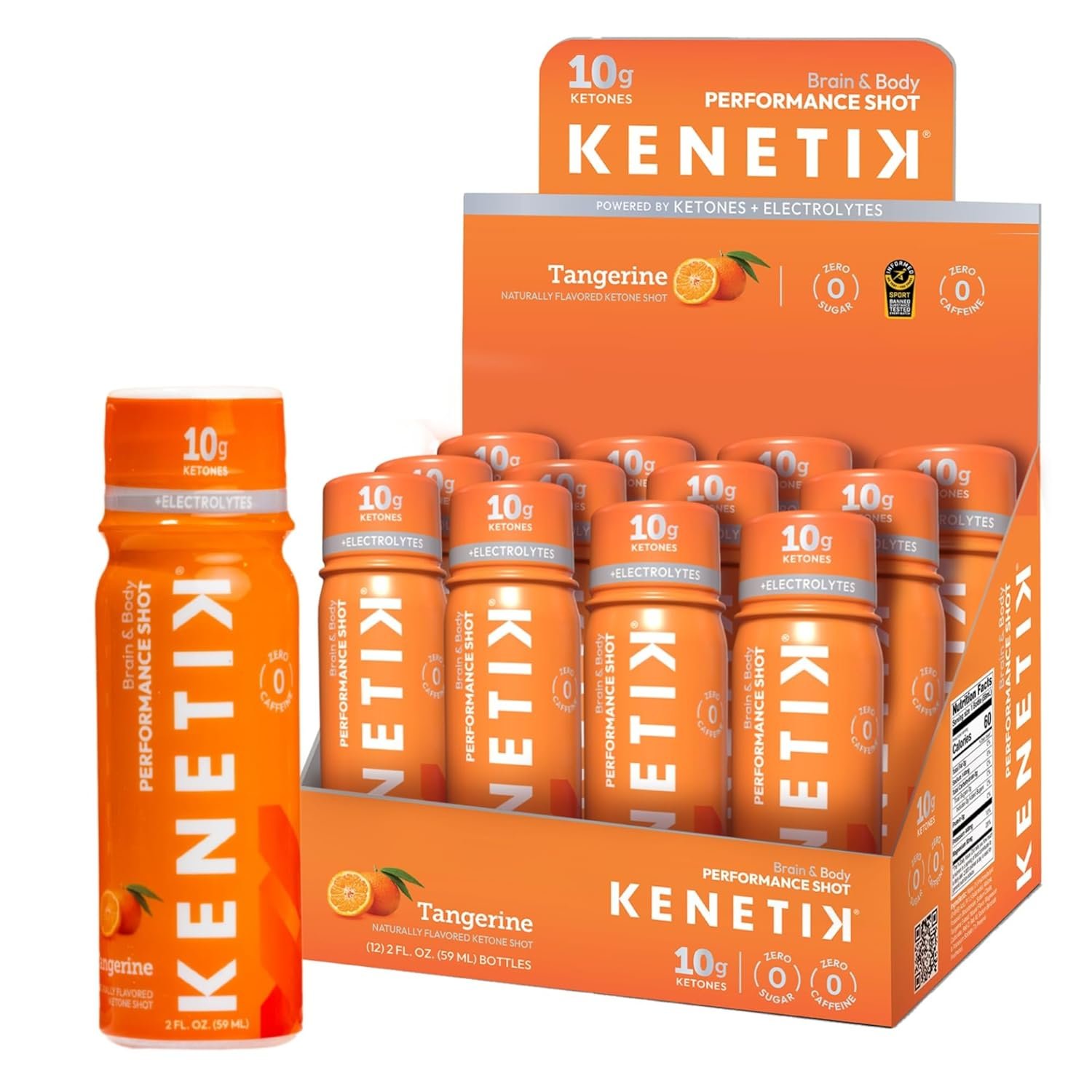
Kenetik Ketone Shots - 10g Ketones Per Serving
For those who want to try exogenous ketones, Kenetik offers a well-formulated option. Each shot contains 10g of ketones with added electrolytes for hydration support.
- Sugar-free and caffeine-free
- Non-GMO and gluten-free
- Contains electrolytes for performance and hydration
- Tangerine flavor - 2 oz shots
- 12-Pack: $59.88 | 6-Pack: $29.94
Based on the research, this product may provide cognitive benefits particularly for those with metabolic challenges, during fasting states, or when cognitive demand is high.
The Bottom Line: Not Placebo, But Not Magic Either
Exogenous ketones are not placebo. The science clearly shows they can affect brain metabolism, increase cerebral blood flow, and improve cognitive outcomes in certain populations. The evidence is particularly strong for individuals with compromised brain glucose metabolism.
However, they're also not the cognitive miracle some marketing suggests. Healthy adults may experience subtle benefits rather than dramatic improvements. The research indicates a "ceiling effect" where normal brain function limits how much additional benefit ketones can provide.
The honest answer is: it depends on who you are. If you have metabolic dysfunction, mild cognitive impairment, or are facing cognitively demanding situations with limited food intake, ketone supplements have good scientific support. If you're a healthy adult hoping for a dramatic cognitive upgrade, temper your expectations.
As with many supplements, the most profound benefits often appear in those who need them most, not those already operating near their cognitive ceiling.
References
- Cunnane SC, et al. "Ketone Supplementation: Meeting the Needs of the Brain in an Energy Crisis." Frontiers in Nutrition. 2022.
- Veech RL, et al. "Ketone bodies, potential therapeutic uses." IUBMB Life. 2001.
- University of Rochester Medical Center. "Can ketones enhance cognitive function and protect brain networks?" URMC Newsroom. May 2024.
- Walsh JJ, et al. "Short-term ketone monoester supplementation improves cerebral blood flow and cognition in obesity: A randomized cross-over trial." Journal of Physiology. 2021.
- Fortier M, et al. "A ketogenic drink improves cognition in mild cognitive impairment: Results of a 6-month RCT." Alzheimer's & Dementia. 2021.
- Prins ML, et al. "Ketone monoester attenuates declines in cognitive performance and oxygen saturation during acute severe hypoxic exposure." Physiological Reports. 2024.
- Reger MA, et al. "Effects of beta-hydroxybutyrate on cognition in memory-impaired adults." Neurobiology of Aging. 2004.
- PsyPost. "Despite the hype, ketone supplements probably won't enhance your cognitive performance, study suggests." 2024.
- Margolis LM, et al. "Effect of exogenous beta-hydroxybutyrate on BDNF signaling, cognition, and amyloid precursor protein processing in humans with T2D." Diabetes Care. 2024.
- Cell Chemical Biology. "beta-hydroxybutyrate is a metabolic regulator of proteostasis in the aged and Alzheimer disease brain." 2024.