The Health Benefits of Copper
Essential Trace Mineral for Energy, Immunity, and Vitality
What is Copper?
Copper is an essential trace mineral that plays a vital role in numerous physiological functions throughout the human body. This reddish-gold metal is required in small amounts but is absolutely crucial for maintaining optimal health and well-being.
As a cofactor for many enzymes, copper participates in critical biochemical reactions that support everything from energy production to immune function. Despite being needed in trace amounts, copper deficiency can lead to serious health complications, making it essential to ensure adequate intake through diet or supplementation.
Copper works synergistically with other minerals, particularly iron and zinc, to support various bodily functions. Understanding copper's role in the body helps highlight why this often-overlooked mineral deserves attention in any comprehensive nutrition plan.
Key Health Benefits of Copper
Iron Absorption
Copper is essential for the proper absorption and utilization of iron in the body. It helps convert iron into its usable form and supports the formation of hemoglobin, preventing anemia.
Collagen Formation
Acts as a cofactor for enzymes involved in collagen and elastin synthesis, supporting healthy skin, bones, connective tissue, and wound healing.
Energy Production
Essential component of enzymes involved in cellular energy production, helping convert food into usable ATP energy in the mitochondria.
Immune Function
Supports immune system health by promoting the development and activity of white blood cells that defend against infections and disease.
Antioxidant Protection
Key component of superoxide dismutase (SOD), a powerful antioxidant enzyme that protects cells from oxidative stress and free radical damage.
Nervous System Health
Supports proper nervous system function by maintaining the myelin sheath that protects nerve cells and facilitates efficient signal transmission.
Iron Absorption and Red Blood Cell Formation
One of copper's most critical functions is its role in iron metabolism. Copper is required for the enzyme ceruloplasmin, which oxidizes iron from its ferrous (Fe2+) to ferric (Fe3+) form, allowing iron to bind to transferrin for transport throughout the body. Without adequate copper, iron cannot be properly mobilized from storage sites or incorporated into hemoglobin, potentially leading to anemia even when iron intake is sufficient.
Collagen Formation and Connective Tissue Health
Copper serves as a cofactor for lysyl oxidase, an enzyme essential for cross-linking collagen and elastin fibers. This process is critical for maintaining the structural integrity of skin, blood vessels, bones, and connective tissues. Adequate copper intake supports skin elasticity, wound healing, bone strength, and cardiovascular health by ensuring proper collagen formation.
Energy Production at the Cellular Level
Copper is a crucial component of cytochrome c oxidase, the final enzyme in the electron transport chain within mitochondria. This enzyme is responsible for the majority of ATP (energy) production in cells. Without sufficient copper, cellular energy production becomes impaired, potentially leading to fatigue and reduced physical performance.
Immune System Support
Copper plays multiple roles in immune function, including supporting the development and activity of neutrophils, macrophages, and natural killer cells. It also helps regulate inflammatory responses and supports the production of antibodies. Adequate copper levels are associated with improved resistance to infections and enhanced immune response.
Antioxidant Defense Through SOD
Copper is an essential component of copper-zinc superoxide dismutase (Cu/Zn-SOD), one of the body's most important antioxidant enzymes. SOD neutralizes superoxide radicals, protecting cells from oxidative damage that can contribute to aging, inflammation, and chronic disease. This antioxidant function is crucial for maintaining cellular health and longevity.
Top Copper-Rich Food Sources
Copper is naturally present in many whole foods, making it possible to meet your daily needs through a balanced diet. Here are the best dietary sources of copper:
Recommended Dosage
Daily Recommended Intake
The Recommended Dietary Allowance (RDA) for adults is 900 micrograms (mcg) per day. Pregnant women require 1,000 mcg daily, and lactating women need 1,300 mcg daily.
Most people can easily meet their copper needs through a balanced diet rich in whole foods. However, certain populations may benefit from supplementation, including those with malabsorption disorders, individuals on long-term zinc supplementation, or those with specific medical conditions affecting copper status.
Important: Copper-Zinc Balance
Maintaining the proper balance between copper and zinc is crucial for optimal health. These two minerals compete for absorption, and excessive intake of one can lead to deficiency of the other. The ideal copper-to-zinc ratio is typically around 1:8 to 1:15.
High-dose zinc supplementation (above 50 mg daily) can interfere with copper absorption and lead to copper deficiency over time. Conversely, excessive copper intake can reduce zinc absorption. If supplementing with either mineral long-term, consider monitoring your status and potentially supplementing both in appropriate ratios.
Symptoms of copper deficiency may include anemia, fatigue, weak bones, impaired immune function, and neurological issues. Copper toxicity is rare from dietary sources but can occur from excessive supplementation, contaminated water, or certain medical conditions. Symptoms of excess copper include nausea, vomiting, diarrhea, and liver damage.
The tolerable upper intake level (UL) for copper is set at 10,000 mcg (10 mg) per day for adults. Most supplements provide between 1-3 mg per serving, well below this upper limit.
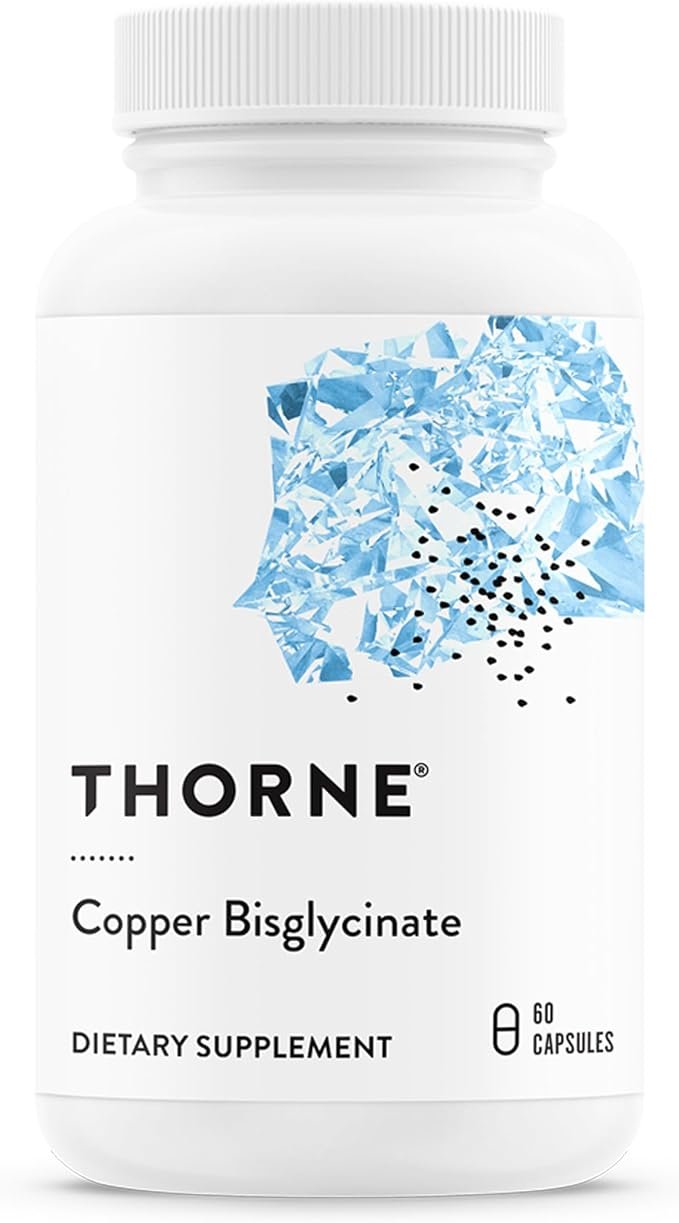
Copper Bisglycinate 2mg
Well-absorbed trace mineral supplement from Thorne Research. Bisglycinate form for enhanced absorption. 60 capsules - trusted pharmaceutical-grade quality.
- 2mg copper per capsule
- Bisglycinate form for enhanced absorption
- Supports iron utilization
- Essential for antioxidant SOD enzyme
- Pharmaceutical-grade quality
- 60 capsules per bottle