The Health Benefits of Chromium
What is Chromium?
Chromium is an essential trace mineral that plays a critical role in human metabolism and overall health. Although required in only small amounts, chromium is vital for maintaining optimal blood sugar levels, supporting insulin function, and promoting healthy macronutrient metabolism.
This mineral exists in several forms, but trivalent chromium (chromium III) is the biologically active form found in foods and supplements. Chromium works at the cellular level to enhance the action of insulin, the hormone responsible for regulating blood glucose levels and facilitating the uptake of nutrients into cells.
Despite its importance, chromium deficiency is relatively common, particularly in Western diets high in processed foods and refined sugars. Understanding the benefits of chromium and ensuring adequate intake can be crucial for maintaining metabolic health and preventing chronic conditions related to blood sugar dysregulation.
Blood Sugar Regulation
One of chromium's most well-documented functions is its role in blood sugar regulation. This mineral acts as a cofactor that enhances insulin sensitivity and helps maintain stable glucose levels throughout the day.
How Chromium Regulates Blood Sugar
Chromium facilitates the binding of insulin to cell receptors, improving the efficiency of glucose transport across cell membranes. When chromium levels are adequate, cells become more responsive to insulin signals, allowing for better glucose uptake and utilization. This mechanism is particularly important for:
- Preventing blood sugar spikes: Chromium helps moderate the rise in blood glucose following meals, reducing the strain on the pancreas
- Reducing hypoglycemic episodes: By improving glucose utilization, chromium can help prevent the rapid drops in blood sugar that lead to energy crashes
- Supporting pancreatic function: Enhanced insulin sensitivity means the pancreas doesn't need to produce excessive amounts of insulin
- Reducing glycation: Better glucose control minimizes the formation of advanced glycation end products (AGEs), which contribute to aging and disease
Research Insight: Multiple studies have shown that chromium supplementation can significantly improve glycemic control in individuals with type 2 diabetes and prediabetes, with some research indicating reductions in fasting glucose levels and HbA1c (a marker of long-term blood sugar control).
Insulin Sensitivity and Metabolic Health
Insulin sensitivity refers to how effectively your cells respond to insulin's signals. High insulin sensitivity is a hallmark of metabolic health, while insulin resistance is a precursor to type 2 diabetes, metabolic syndrome, and cardiovascular disease.
Chromium's Impact on Insulin Function
Chromium enhances insulin sensitivity through multiple mechanisms, making it a valuable tool for metabolic optimization:
- Improved receptor binding: Chromium increases the number of insulin receptors on cell surfaces and improves their binding affinity
- Enhanced cellular signaling: The mineral supports the intracellular signaling pathways activated by insulin
- Reduced insulin resistance: Regular chromium intake has been associated with improvements in insulin resistance markers
- Weight management support: Better insulin function can help reduce fat storage and support healthy body composition
Glucose Tolerance Factor (GTF)
Chromium is a key component of a compound called Glucose Tolerance Factor (GTF), a complex that includes chromium, nicotinic acid (vitamin B3), and amino acids. GTF is thought to be the biologically active form of chromium that directly enhances insulin action.
While the exact structure of GTF continues to be studied, research suggests that chromium-containing compounds work synergistically with insulin to facilitate glucose uptake into cells. This explains why chromium supplementation can be particularly beneficial for individuals with impaired glucose tolerance or insulin resistance.
Comprehensive Metabolic Health Benefits
Beyond blood sugar control, chromium supports various aspects of metabolic health that contribute to overall longevity and wellbeing:
Lipid Metabolism
Chromium has been shown to positively influence lipid profiles by:
- Increasing HDL (good) cholesterol levels
- Reducing total cholesterol and LDL (bad) cholesterol
- Lowering triglyceride levels
- Supporting healthy cardiovascular function
Protein and Carbohydrate Metabolism
Chromium plays a role in the metabolism of all macronutrients, helping your body efficiently process proteins, carbohydrates, and fats for energy production and cellular function.
Appetite and Cravings
Some research suggests that chromium supplementation may help reduce food cravings, particularly for carbohydrates and sweets, by stabilizing blood sugar levels and reducing the dramatic fluctuations that trigger hunger signals.
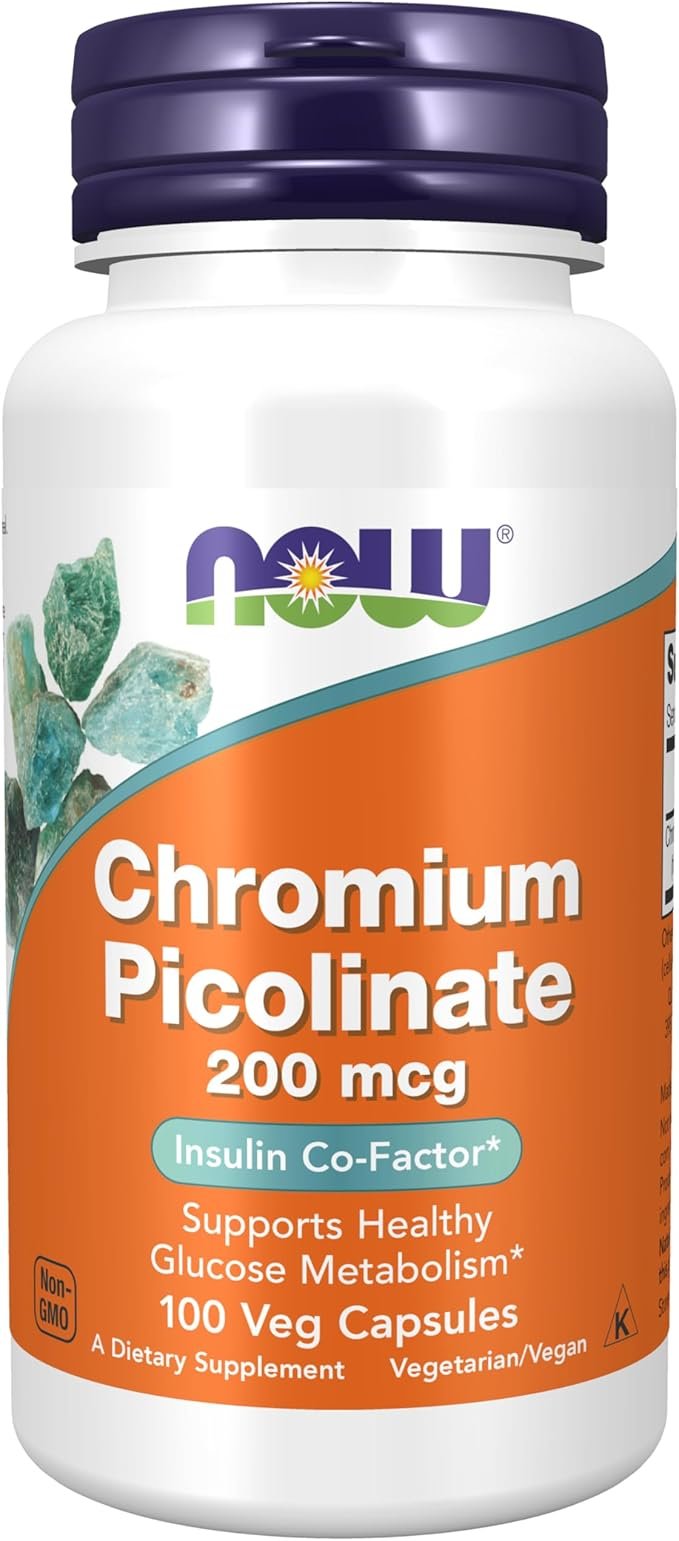
NOW Chromium Picolinate 200mcg
High-quality, highly absorbable chromium picolinate
Insulin co-factor for healthy glucose metabolism
100 Veg Capsules - Non-GMO
Forms of Chromium: Picolinate vs. Polynicotinate
Not all chromium supplements are created equal. The form of chromium you choose can significantly impact absorption and effectiveness:
Chromium Picolinate
Chromium picolinate is the most widely studied and commonly used form of chromium supplementation. In this form, chromium is bound to picolinic acid, which enhances its absorption in the intestines.
- High bioavailability: Studies show chromium picolinate is well-absorbed and effectively raises chromium levels in the body
- Extensive research: Most clinical trials on chromium have used the picolinate form
- Proven efficacy: Demonstrated benefits for blood sugar control and insulin sensitivity
- Safe profile: Generally recognized as safe at recommended doses
Chromium Polynicotinate
Chromium polynicotinate is chromium bound to niacin (vitamin B3). This form claims to mimic the naturally occurring Glucose Tolerance Factor (GTF) more closely.
- GTF-like structure: Theoretically closer to the body's natural chromium-containing compounds
- Niacin benefits: May provide additional benefits from the niacin component
- Less research: Fewer clinical studies compared to chromium picolinate
- Good alternative: May be preferred by those seeking a more natural form
Other Forms
Other chromium supplements include chromium chloride and chromium-enriched yeast. While these forms provide chromium, they generally have lower bioavailability compared to picolinate and polynicotinate forms.
Bottom Line: Chromium picolinate remains the gold standard due to extensive research and proven effectiveness. However, chromium polynicotinate is a viable alternative, particularly for those seeking a form more similar to naturally occurring GTF.
Natural Food Sources of Chromium
While supplementation can be beneficial, obtaining chromium from food sources should be your first priority. Chromium is found in a variety of whole foods, though the amounts can vary based on soil quality and food processing:
Excellent Sources
- Broccoli: One of the richest sources, providing approximately 22 mcg per cup
- Grape juice: Contains about 8 mcg per cup
- Whole grains: Whole wheat bread, oats, and barley retain chromium in the grain
- Brewer's yeast: An exceptionally rich source with high bioavailability
Good Sources
- Meats: Beef, poultry, and turkey provide moderate amounts
- Green beans: Contain approximately 2 mcg per cup
- Potatoes: With skin, provide about 3 mcg per medium potato
- Eggs: Modest chromium content with other nutritional benefits
- Nuts and seeds: Particularly Brazil nuts and hazelnuts
- Dark chocolate: Contains chromium along with beneficial flavonoids
Important Considerations
Processing and refining significantly reduce chromium content in foods. For example, refined grains lose up to 80% of their chromium during processing. This is one reason why whole food diets tend to provide more adequate chromium levels compared to diets high in processed foods.
Recommended Dosage and Guidelines
Determining the optimal chromium intake depends on various factors including age, metabolic health status, and dietary patterns.
Daily Adequate Intake (AI)
The Institute of Medicine has established Adequate Intake levels for chromium:
- Adult men (19-50 years): 35 mcg per day
- Adult women (19-50 years): 25 mcg per day
- Men over 50: 30 mcg per day
- Women over 50: 20 mcg per day
- Pregnant women: 30 mcg per day
- Breastfeeding women: 45 mcg per day
Therapeutic Dosing
For individuals with blood sugar concerns or metabolic issues, higher doses are often used under professional guidance:
- Blood sugar support: 200-1,000 mcg per day, divided into doses
- Insulin resistance: Studies have used 200-500 mcg per day effectively
- Type 2 diabetes: Research protocols often use 400-600 mcg per day
Safety and Toxicity
Chromium has a wide safety margin, and no tolerable upper intake level has been established due to the lack of documented toxicity from oral chromium intake. However, it's important to:
- Start with lower doses and gradually increase if needed
- Consult with a healthcare provider, especially if you have diabetes or are taking medications
- Monitor blood sugar levels if using chromium for glycemic control
- Be aware that chromium can enhance insulin's effects, potentially requiring medication adjustments
Optimal Strategy: For general health maintenance, aim for 25-35 mcg daily through diet and supplementation. For metabolic support, consider 200-400 mcg of chromium picolinate, preferably divided into two doses with meals for optimal absorption and blood sugar stability.
Conclusion: Chromium for Longevity and Metabolic Excellence
Chromium stands out as an essential trace mineral with profound implications for metabolic health, blood sugar control, and long-term wellness. Its role in enhancing insulin sensitivity and supporting healthy glucose metabolism makes it particularly valuable in our modern environment, where metabolic dysfunction has become increasingly prevalent.
Whether obtained through chromium-rich whole foods or high-quality supplements like chromium picolinate, ensuring adequate chromium intake is a fundamental step toward optimizing your metabolic health and supporting healthy aging.
As with any supplement, chromium works best as part of a comprehensive approach to health that includes a nutrient-dense diet, regular physical activity, stress management, and adequate sleep. By addressing chromium status alongside these other pillars of health, you create the foundation for sustained vitality and longevity.