EDIT ARTICLE
Or pick from site library (images already on longevityfutures.online)
The $8 Supplement That Rivals a $1500 Drug
Berberine has been around for thousands of years. Western medicine is only just catching up.
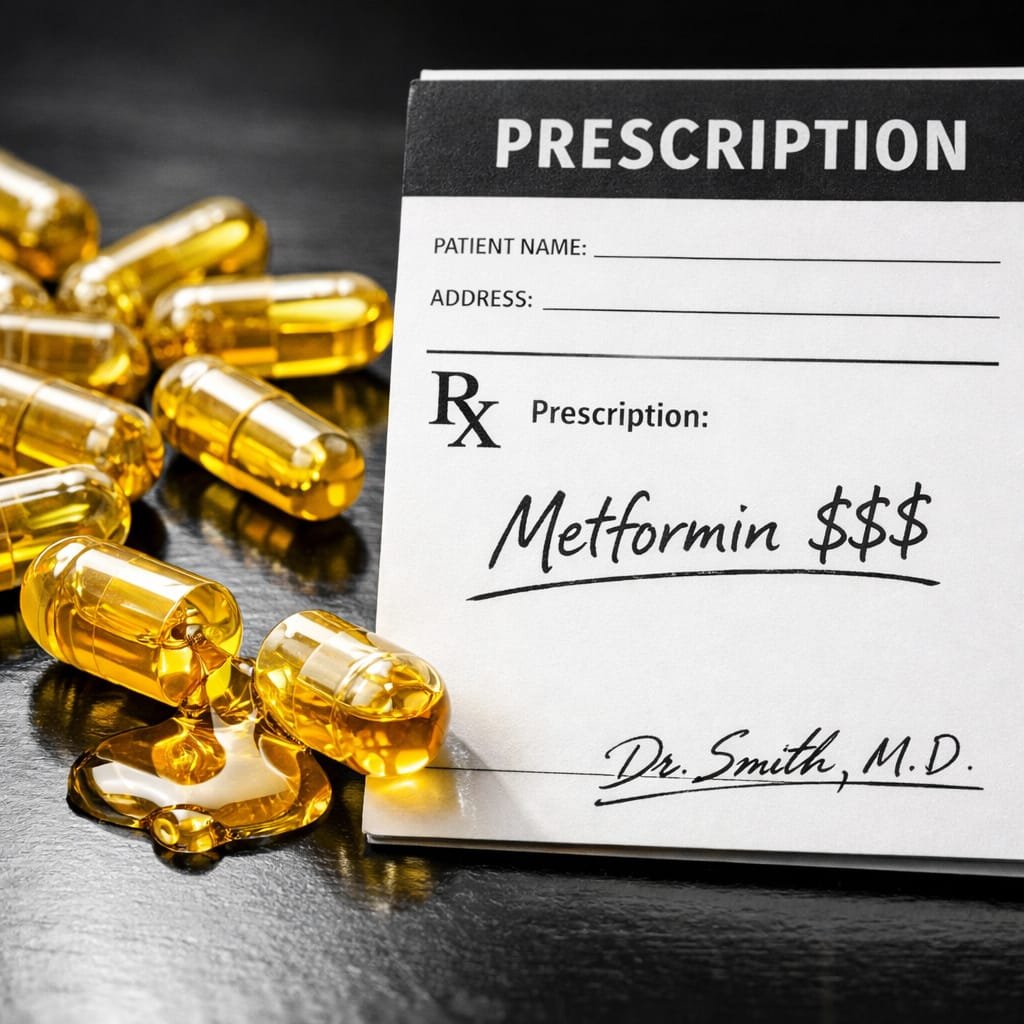
Metformin is the world's most prescribed diabetes drug. Doctors hand it out like business cards. It's been the go-to for blood sugar management for decades.
More recently, longevity researchers started taking it themselves. Not because they're diabetic. Because the data on lifespan extension looked so compelling that some of the smartest people in the field decided to pop it as a preventative.
One small problem. You need a prescription. And depending where you live, it'll run you anywhere from $30 to $1500 a year.
Berberine does almost the same thing. You can buy it over the counter for about eight dollars.
It's a compound found in several plants, goldenseal, barberry, Oregon grape. Traditional Chinese and Ayurvedic medicine has used it for thousands of years, mostly for gut infections and inflammation. Modern science looked at it and found something nobody expected.
Berberine activates an enzyme called AMPK, sometimes called the body's "master metabolic switch." When AMPK fires up, your cells start burning fat more efficiently, blood sugar drops, inflammation goes down, and your mitochondria start performing better.
Guess what else activates AMPK? Metformin. Same switch. Same pathway. Different price tag.
A 2008 study in the journal Metabolism compared berberine directly against metformin in type 2 diabetics. Berberine reduced HbA1c, a long term blood sugar marker, by 0.9 percent. Metformin reduced it by 1.0 percent. Close to identical. But berberine also lowered triglycerides and LDL cholesterol significantly. Metformin didn't.
A plant extract matched a pharmaceutical drug on blood sugar and beat it on cholesterol.
Multiple studies since then have confirmed the pattern. Berberine consistently drops fasting blood sugar by 15 to 25 percent, reduces HbA1c by 0.5 to 1.0 percent, lowers triglycerides by 20 to 35 percent, and cuts LDL cholesterol by 15 to 25 percent. For eight dollars.
This matters even if you're not diabetic. Blood sugar control is one of the single biggest predictors of how well you age. High blood sugar accelerates inflammation, oxidative stress, glycation, where sugar literally caramelises your proteins, cardiovascular damage, and cognitive decline. People with consistently stable, low blood sugar live longer. The data on this is overwhelming.
David Sinclair, probably the most visible longevity researcher alive, takes metformin specifically for its AMPK-activating properties. Berberine hits the same target. No prescription needed. No doctor visit. Eight dollars at a health shop.
There are downsides. Some people get stomach cramps, diarrhea, or nausea when they start. Usually goes away within a week or two if you start with 500mg once daily instead of the standard three times daily.
Drug interactions are the big one. Berberine is metabolised by the same liver enzymes as many common medications. If you're on anything prescription, especially statins, blood pressure meds, or blood thinners, check with your doctor first. Not optional. Check.
And it won't save you if you're eating takeaway every night and never moving your body. It's a tool. A powerful one. But tools only work when you use them alongside the basics.
Standard dose is 500mg, two to three times daily with meals. Start low, always take it with food, and some practitioners recommend cycling 8 weeks on, 2 weeks off.
Eight dollars. No prescription. Thousands of years of traditional use backed up by modern clinical data. This one's been sitting on the shelf the whole time. We just forgot to look.
Want to know how your habits are affecting your lifespan? Take the Longevity Quiz at longevityfutures.online and find out.
More recently, longevity researchers started taking it themselves. Not because they're diabetic. Because the data on lifespan extension looked so compelling that some of the smartest people in the field decided to pop it as a preventative.
One small problem. You need a prescription. And depending where you live, it'll run you anywhere from $30 to $1500 a year.
Berberine does almost the same thing. You can buy it over the counter for about eight dollars.
It's a compound found in several plants, goldenseal, barberry, Oregon grape. Traditional Chinese and Ayurvedic medicine has used it for thousands of years, mostly for gut infections and inflammation. Modern science looked at it and found something nobody expected.
Berberine activates an enzyme called AMPK, sometimes called the body's "master metabolic switch." When AMPK fires up, your cells start burning fat more efficiently, blood sugar drops, inflammation goes down, and your mitochondria start performing better.
Guess what else activates AMPK? Metformin. Same switch. Same pathway. Different price tag.
A 2008 study in the journal Metabolism compared berberine directly against metformin in type 2 diabetics. Berberine reduced HbA1c, a long term blood sugar marker, by 0.9 percent. Metformin reduced it by 1.0 percent. Close to identical. But berberine also lowered triglycerides and LDL cholesterol significantly. Metformin didn't.
A plant extract matched a pharmaceutical drug on blood sugar and beat it on cholesterol.
Multiple studies since then have confirmed the pattern. Berberine consistently drops fasting blood sugar by 15 to 25 percent, reduces HbA1c by 0.5 to 1.0 percent, lowers triglycerides by 20 to 35 percent, and cuts LDL cholesterol by 15 to 25 percent. For eight dollars.
This matters even if you're not diabetic. Blood sugar control is one of the single biggest predictors of how well you age. High blood sugar accelerates inflammation, oxidative stress, glycation, where sugar literally caramelises your proteins, cardiovascular damage, and cognitive decline. People with consistently stable, low blood sugar live longer. The data on this is overwhelming.
David Sinclair, probably the most visible longevity researcher alive, takes metformin specifically for its AMPK-activating properties. Berberine hits the same target. No prescription needed. No doctor visit. Eight dollars at a health shop.
There are downsides. Some people get stomach cramps, diarrhea, or nausea when they start. Usually goes away within a week or two if you start with 500mg once daily instead of the standard three times daily.
Drug interactions are the big one. Berberine is metabolised by the same liver enzymes as many common medications. If you're on anything prescription, especially statins, blood pressure meds, or blood thinners, check with your doctor first. Not optional. Check.
And it won't save you if you're eating takeaway every night and never moving your body. It's a tool. A powerful one. But tools only work when you use them alongside the basics.
Standard dose is 500mg, two to three times daily with meals. Start low, always take it with food, and some practitioners recommend cycling 8 weeks on, 2 weeks off.
Eight dollars. No prescription. Thousands of years of traditional use backed up by modern clinical data. This one's been sitting on the shelf the whole time. We just forgot to look.
Want to know how your habits are affecting your lifespan? Take the Longevity Quiz at longevityfutures.online and find out.